Georgia has a strange, outsized place in Bitcoin history. A country of under four million people, with cheap hydro power and a government keen on foreign investment, hosted one of the world’s biggest mining operations in the mid-2010s, then watched thousands of households in the mountains plug rigs into free village power. Both stories are still playing out. Industrial miningMiningUsing specialised computers to secure a blockchain like Bitcoin and earn new coins in return. It is mostly an electricity business. has moved back into the free industrial zones, while the state has just cracked down on miners in Svaneti.
This page sets out what is actually known about crypto mining in Georgia: the history, the electricity, the scale today, the legal position and the tax rules, including the parts where the sources disagree. If you only want to own some Bitcoin, mining is rarely the sensible route here, and our guide on buying Bitcoin in Georgia will get you there faster.
How Bitfury put Georgia on the mining map
The story starts in Gori, the Shida Kartli town better known as Stalin’s birthplace. In mid-2014 the mining company Bitfury opened a data centre of about 20 MW there. JAMnews reported that it was part-financed by a USD 10 million loan from the state-backed Georgian Co-Investment Fund, which tells you how welcome the project was.
The second step was bigger. The state sold Bitfury an 18-hectare plot in Gldani, on the northern edge of Tbilisi, for a symbolic GEL 1, and the land became the Tbilisi Free Industrial Zone. The new data centre opened in December 2015 at about 40 MW, taking the company’s Georgian capacity to roughly 60 MW. Bitfury had planned up to 100 MW on the site.
Those two buildings made Georgia a name every miner knew. A 2019 New York Times estimate, cited by the research firm K33, suggested that up to 200,000 Georgians were involved in mining in some form, from the Bitfury halls to rigs in garages and village houses. The Gldani facility still runs today, but the operator has changed: press reports in 2026 describe it as being run by AITEC Solution, formerly Bitfury’s site.
Hydro power: why miners came to Georgia
Mining is electricity turned into coins, so the power mix explains everything. According to K33’s 2022 country study, roughly 76% of Georgia’s generation is hydro and about 23% is gas. The Enguri hydro plant on the border of Samegrelo and occupied Abkhazia, rated at 1,200 MW, supplies about a third of the country’s power on its own.
Hydro is cheap once the dam is built, and in spring and early summer the rivers produce more than the country needs. That made Georgian electricity attractive to data centres at a time when miners were chasing every fraction of a cent. JAMnews reported a Tbilisi commercial high-voltage tariff of 16.1 tetri per kWh in 2018. K33 later cited industrial prices of roughly USD 0.04–0.06 per kWh. Both figures are dated, and tariffs have since risen: commercial tariffs went up by 30–50% in January 2021.
There is a catch. Georgia has been a net importer of electricity since 2017 (K33), and winter is the tight season, when rivers run low and demand peaks. That tension between cheap summer hydro and a winter deficit is the backdrop to every political argument about mining in Georgia.
How big mining is today
After the boom-and-bust years, legal mining in Georgia is growing again and is concentrated in free industrial and economic zones in Tbilisi (Gldani) and Kutaisi. The best recent numbers come from press reports citing data from the energy regulator GNERC, as reported by Business Gruzia and picked up by Cryptopolitan in April 2026. We could not check them on gnerc.org itself, so treat them as reported rather than official.
The same reports name the largest consumers. The figures come from a single press chain and differ between versions, so read them as an order of magnitude:
| Company | Location | Reported consumption |
|---|---|---|
| AITEC Solution | Gldani, Tbilisi FIZ | 403m or 450m kWh (sources differ) |
| Texprint Corporation | Kutaisi free zone | 147m kWh in nine months |
| TFZ Service | Tbilisi FIZ (power reseller) | 104m kWh |
| ITLab | not stated | 24.6m kWh |
| Sain Fiz | not stated | 18.6m kWh |
| DATA Hub | not stated | 7.2m kWh |
Another version of the report gives 675 million kWh for January to November 2025, up 80%. The direction is clear either way: industrial mining has roughly tripled in a year and now draws around one kilowatt-hour in twenty consumed in Georgia.
You will see claims online about Georgia’s share of the global hash rateHash rateHow much computing power is securing a network. More hash rate means a more expensive network to attack.. Estimates from different years and methods vary wildly, and none of them is official, so we do not publish one.
Svaneti and Mestia: free power, metering and seizures
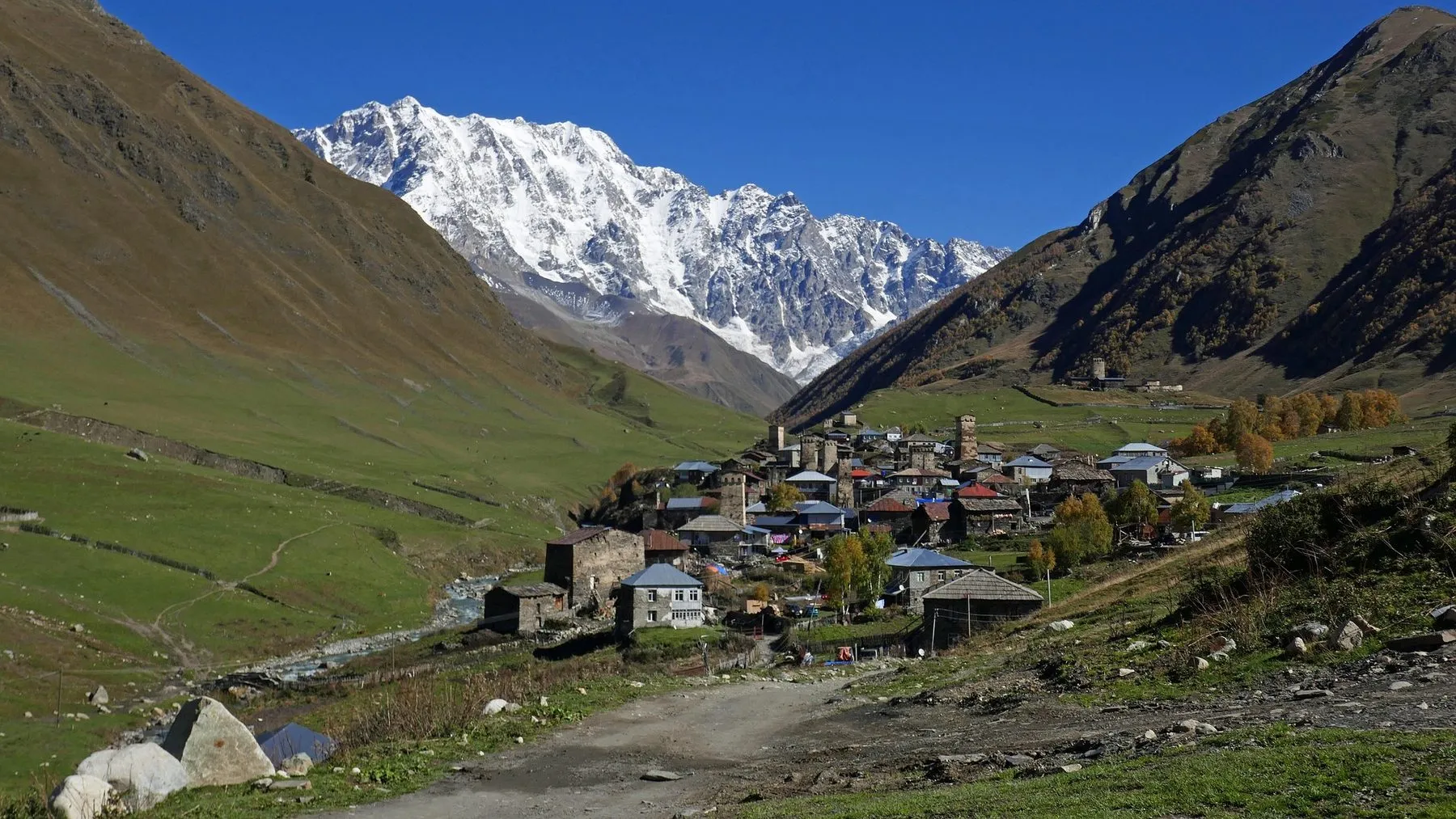
Households in Mestia municipality, the heart of Upper Svaneti, have not paid for electricity since the 1990s. The subsidy was meant to keep people in a remote mountain region. It also made Mestia an ideal place to run a rig with no power bill at all.
The numbers caught up with it. Mestia consumed about 133 million kWh in 2025, around 13 times more than comparable municipalities, with estimated losses of GEL 20–25 million a year. On 1 June 2026 Vice-Prime Minister Mamuka Mdinaradze announced household and village metering. Electricity stays free up to a cap, and consumption above it is billed. Police were told to go after large-scale use.
Enforcement followed immediately. Police seized 148 mining devices at six locations, and Georgia Today later reported 76 more seized in Mestia. Press reports say the offence (illegal use of electricity) can carry up to three years in prison.
Abkhazia is a separate story
Some headlines about “mining bans in Georgia” are about Abkhazia, which is occupied territory outside the control of the Georgian government. Its de facto authorities banned mining in December 2018, legalised it with permits in 2020, banned it again during the Enguri repairs in 2020–2021, and in 2025 had a full ban bill pass only a first reading (JAMnews, RFE/RL, ForkLog). Mining there is blamed for about half the winter power deficit. None of these rules come from Tbilisi, and none of them apply in the rest of the country.
Is crypto mining legal in Georgia?
Yes. The legal framework for crypto in Georgia is built on 2022 amendments to the Organic Law on the National Bank of Georgia, in force since 1 January 2023. They define virtual asset services as a closed list: exchange, transfer, safekeeping, portfolio management, running a trading platform, lending and ICOs. Anyone who provides those services to other people must register with the NBGNBGNational Bank of Georgia — the central bank. It supervises banks and, since 2023, crypto service providers (VASPs). as a VASPVASPVirtual Asset Service Provider — a crypto exchange, ATM operator or custodian. In Georgia every VASP must be registered with the National Bank (NBG)..
Mining is not on that list. Producing coins for your own account is not a service to a customer, so on our reading a miner does not need NBG registration. Nor did we find any dedicated mining law, GNERC tariff for miners or mining licence, either during the 2018–2019 boom or since. The only crypto-specific act that mentions mining is the Ministry of Finance’s 2019 tax decision on “supplying computing power”, covered below. For the wider picture, see our explainer on whether crypto is legal in Georgia.
Three things can still turn a mining operation into a legal problem:
- Power. Bypassing a meter, tapping a line or abusing a subsidised household supply is treated as illegal use of electricity, as Svaneti showed.
- Selling to others. If you start exchanging coins for customers, holding their funds or running a hosting service that takes custody of coins, you are moving into VASP territory. Our page on VASP registration explains when that line is crossed.
- Paying with the coins. Crypto is not legal tender, and Article 39¹ of the NBG law prohibits payments with virtual assets. You cannot settle a hosting bill or a supplier invoice in BTC with a Georgian company. Convert first.
How mining is taxed in Georgia
The key document is Ministry of Finance Public Decision No. 201 of 28 June 2019, “On the taxation of crypto-assets and operations of supplying computing power for their extraction”. It treats mining as an electronically supplied service, the supply of computing power, and sets out the VAT position:
| Situation | VAT | Input VAT |
|---|---|---|
| You supply computing power to a customer abroad with no Georgian presence | Not charged | Creditable |
| You supply computing power to a customer in Georgia | Charged | Creditable |
| You exchange mined coins for lari or dollars | Outside VAT (crypto treated like money) | — |
Income tax is where it gets murky. Decision 201 says that when a natural person supplies crypto-assets, the income is not Georgian-source, which is the basis of Georgia’s well-known 0% rate on selling crypto (explained in full in our crypto tax guide). But the decision does not clearly say what happens to the mining reward itself.
Companies follow Georgia’s Estonian-style profit tax: 15% corporate income tax only when profits are distributed, plus 5% withholding on dividends. Free industrial zone companies are exempt from VAT, profit tax and property tax, and their electricity is VAT-free, which JAMnews and K33 described as making it about 18% cheaper. One older source says free-zone miners could still owe VAT depending on how mining is classified, which we could not confirm. That combination of exemptions is why the big operations sit in Gldani and Kutaisi rather than in ordinary industrial estates.
Practical considerations before you plug in a rig
Mining economics change with the Bitcoin price, the network difficulty and your tariff, and we cannot give you reliable Georgian break-even figures. What we can give you is the checklist of local questions that decide whether a project makes sense.
Tariff and connection. Household tariffs are much higher than the industrial rates that made Georgia famous, and they apply to anything plugged in at home. Industrial supply needs a proper connection agreement. Ask the distribution company for the current tariff in writing; do not plan on 2018 numbers.
Location. Free zones offer tax exemptions but require a zone company and a lease or hosting agreement. Kutaisi and Tbilisi are the established hubs. Our pages on Kutaisi and other regions cover the local crypto infrastructure if you are setting up outside the capital.
Winter. Georgia imports power in winter. Hydro-heavy pricing and political pressure both tighten in the cold months, so assume your costs or curtailment risk rise then.
Noise, heat and neighbours. ASIC miners are loud. In an apartment block, building management and neighbours can make your life difficult even where the law does not.
Scams. “Cloud mining” contracts and “mining pool” investment offers are a classic way to lose money, and they target Georgian Telegram and Facebook groups too. Read our guide to crypto scams in Georgia before you pay anyone to mine on your behalf. And despite the name, Pi Network’s phone app does not mine anything in the proof-of-work sense; see Pi Coin in Georgia for how that works.
Turning mined coins into lari
Mining only pays off when the coins become money you can spend. The compliant route is the same one every Georgian holder uses.
Move coins to a wallet you control
Pay pool payouts to your own wallet, ideally a cold walletCold walletAny wallet whose keys stay offline — a hardware device or even a paper backup. for anything you are not selling soon. Our wallet guide compares the options available in Georgia.
Pick an NBG-registered provider
Choose an exchange or office from the list of licensed crypto exchanges. The NBG register had 43 active VASPs in the version dated 23 October 2026.
Sell for GEL or USD
Sell into lari or dollars and have the money paid to your Georgian bank account. Our cash-out guide compares bank transfer, cash offices and sell-enabled ATMs.
Keep the paper trail
Save pool statements, wallet addresses and exchange receipts. Georgian banks ask about crypto-sourced deposits, and the same records answer the tax office if the 20% question is ever put to you.
Not planning to mine? Buying a fraction of a Bitcoin takes minutes.Card purchase on a licensed global exchange; compare local options in our guides.
Buy BitcoinMining in Georgia is legal, lightly regulated and heavily shaped by electricity politics. The free-zone operators know their costs to the tetri. For everyone else, the honest summary is this: pay for your power, keep your records, sell through a registered provider, and assume the tax answer on mining income is not yet settled.